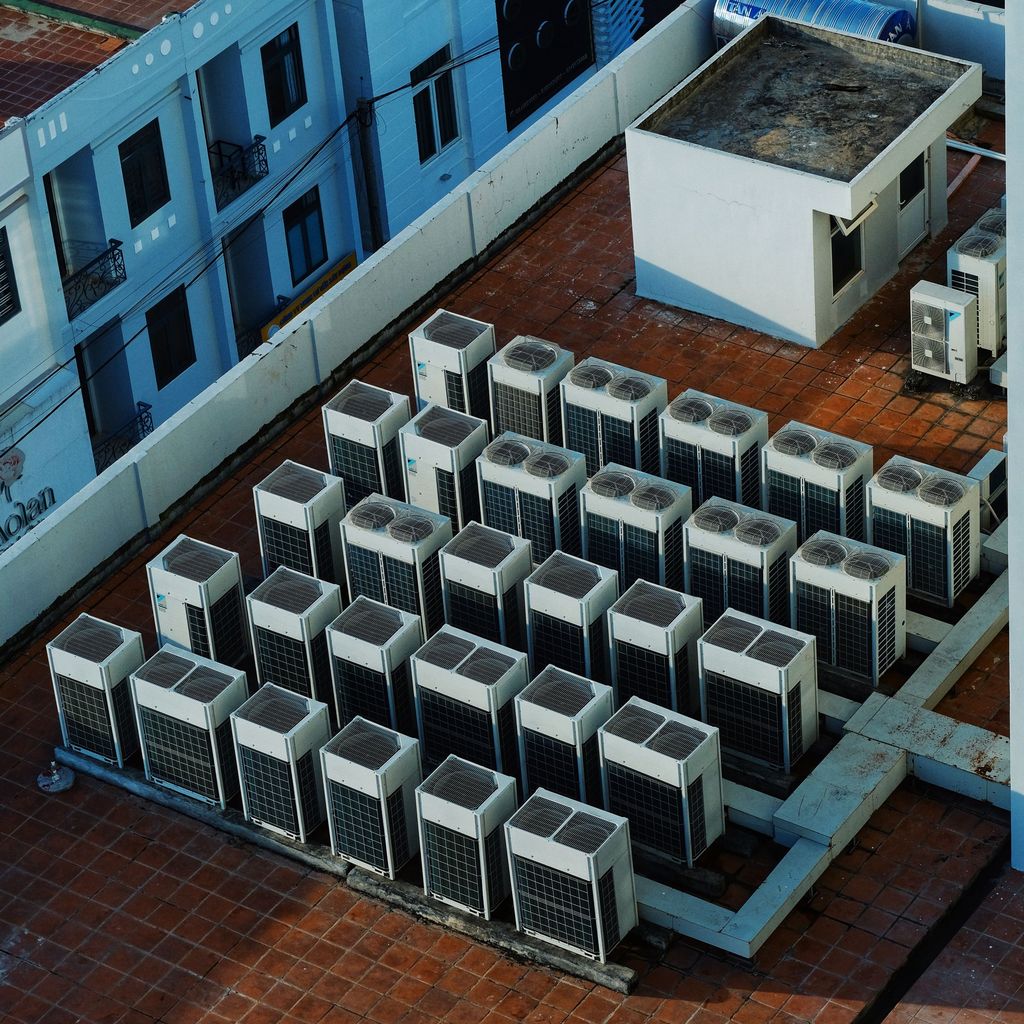
Planning an RTU swap
Rooftop unit replacements are among the most common lifts in the Valley, and the busy cooling season puts pressure on HVAC contractors and crane schedules alike. Planning ahead keeps the building down for as little time as possible.
- Unit weights: share the model numbers of both the old and new units; the heavier of the two, plus rigging, sets the crane size.
- Distance: measure from where the crane can set up to the curb. Units in the middle of a large roof need far more crane than units near the edge.
- Timing: many lifts are scheduled early in the morning to beat the heat and traffic, and to minimize disruption to occupants.
- Multiple units: doing several units in one mobilization is usually more efficient than separate trips.
- Street or parking lot setup: may need lot closures or a city permit.
What to have ready when you request a quote
Crane companies price a lift from a handful of facts. The more of these you can share, the faster and more accurate your quote:
- The load: what it is, approximate weight, and dimensions. Spec sheets or submittals for HVAC units, generators, or machinery are ideal.
- The pick and set points: where the crane can park, how far horizontally the load has to travel (radius), and how high it needs to go.
- Site conditions: ground surface (paved, compacted, soft dirt), slopes, overhead power lines, trees, and whether the crane would sit on a street or sidewalk.
- Timing: date, start time, and whether the work must happen early morning, at night, or on a weekend.
- Rigging: whether you have rigging and a qualified rigger and signal person, or need the crane company to supply them.
Safety and compliance basics
On construction sites, federal OSHA rules for cranes (29 CFR 1926 Subpart CC) require, among other things, a certified or qualified operator, qualified riggers and signal persons, ground conditions that can support the crane, and specific clearances from energized power lines. In Arizona, workplace safety is administered by ADOSH, which adopts these standards. A reputable crane company will ask about these items up front — that’s a good sign, not red tape.
Lifts that are heavy relative to the crane’s capacity, over occupied areas, or involve multiple cranes often require a written lift plan. Lifts from a public street or sidewalk usually need a right-of-way or street-use permit from the city; the crane company or your general contractor can typically advise on who pulls it.
How it works
- Tell us about the lift using the quote form: the load, the reach, the site, and your date.
- We line up the right crew from the vetted, licensed and insured local crane companies we work with — one that handles that type and size of lift in your area.
- You get taken care of The crane company reaches out promptly, usually the same business day, to confirm details, schedule, and quote. You work directly with them, and there’s no fee to you.